
About Us
The Ijaw National Congress Americas (INCA) is a unifying platform dedicated to connecting Ijaw people across the Americas, preserving our rich cultural heritage, and advancing the collective aspirations of our community. We foster belonging, empower the next generation through mentorship and opportunity, strengthen community support, and promote economic collaboration.
Through responsible leadership, strategic partnerships, and meaningful engagement with our ancestral homeland, we strive to build a stronger, more connected Ijaw community and create lasting opportunities for generations to come.
To build a united, empowered, and thriving Ijaw community across the Americas—rooted in our heritage, committed to future generations, and connected to the sustainable development of our homeland.
To unite and empower Ijaw people across the Americas by preserving our cultural heritage, fostering community support and leadership, creating opportunities through education and professional development, and mobilizing knowledge, resources, and partnerships for the sustainable advancement of our people and homeland..
We connect the Ijaw diaspora across the Americas, preserve our culture, develop future leaders, support our members and contribute to the sustainable development of our homeland.
Our Objectives
Our objectives reflect our commitment to uniting the Ijaw diaspora, preserving our cultural heritage, empowering future leaders, and creating opportunities for collective progress. Through community support, economic collaboration, peaceful advocacy, and sustainable development initiatives, we strive to strengthen our people and build a lasting legacy for generations to come.
Build lasting partnerships
Contribute to homeland development
Connect our diaspora
Keep our culture alive
Prepare the next generation
Strengthen community support
Expand economic opportunities
Represent shared interests
History of the Ijaw People
From Oru Ancestral Traditions to the Modern Ijaw Nation
The Ijaw people, also known as Ijo or Izon, are an indigenous people of the Niger Delta whose history is deeply connected to its rivers, creeks, forests, and coastal waters. Across generations, they developed communities, kingdoms, trading networks, and cultural institutions that continue to shape their identity.
At the heart of this heritage is the tradition of "Oru"—an ancestral name associated with the early populations from whom the Ijaw people trace their foundations. The story of the Ijaw brings together ancestral memory, migration, settlement, cultural development, and the continuing pursuit of dignity and self-determination.
Oru: Our Ancestral Foundations
In Ijaw ancestral traditions, the earliest forebears are remembered as "Oru", sometimes written as "Horu", and associated in some accounts with "Tobu-Otu", the ancient people. Related traditions describe "Beni-Otu", or water people, reflecting the close relationship between ancestral communities and the river environment.
Some narratives describe these ancestors as descending from the sky or emerging from sacred waters. These accounts express sacred ancestry, spiritual belonging, and the relationship between a people and their homeland.
The traditional expression “Ijo are Oru” affirms this ancestral continuity. It recognizes Oru as a foundation of Ijaw identity, which developed over time through settlement, interaction, and the formation of distinct communities.
Traditions of Origin and Migration
Ijaw accounts of distant origins preserve several interpretations. Some trace ancestral connections to the Nile Valley, Nubia, and the Lake Chad region, describing movements toward West Africa and the Niger–Benue waterways. Other traditions identify Nupe, Ife, and the Benin region as places of residence or passage before settlement in the delta.
These narratives form an important part of Ijaw historical consciousness. However, the precise routes and dates remain subjects of research. The proposed Nile Valley connection is an origin hypothesis rather than a conclusively established migration history.
Historian Ebiegberi Joe Alagoa described ancestral movement down the Niger from unspecified homelands in the West African hinterland. This interpretation recognises the importance of migration while leaving the distant homeland open to further investigation.
Father Ijo and the Emergence of a Shared Identity
Many traditions associate the name Ijo with an ancestral figure remembered as “Ijo or Ujo”, also called “Father Ijo, Izonowei, or Pere Ijo”.
He occupies an important place in narratives of community formation and leadership in the central Niger Delta. In these traditions, Father Ijo represents both a founding ancestor and the wider ancestral population associated with him.
The names “Ijo, Izon, and Ijaw” reflect related forms of identification, with usage varying across communities. Their shared identity developed over generations, while individual communities retained their own founding histories and traditions.
Agadagba-bou: A Centre of Ancestral Memory
“Agadagba-bou”, associated with the Igbedi Creek and Wilberforce Island area of present-day Bayelsa State, holds a prominent place in Ijaw historical memory.
Traditions remember it as a centre of settlement, spiritual authority, and political organisation. Some accounts associate it with “Isena-Ibe”, or nine ancestral lines, and describe the dispersal of populations from this and other ancestral centres.
Archaeological research provides evidence of longstanding settlement in the central delta, including at Isomabou. It also highlights the difficulty of matching every excavated site with the places described in oral traditions. Agadagba-bou’s exact location and chronology therefore remain matters for continued investigation.
A People Connected by Water
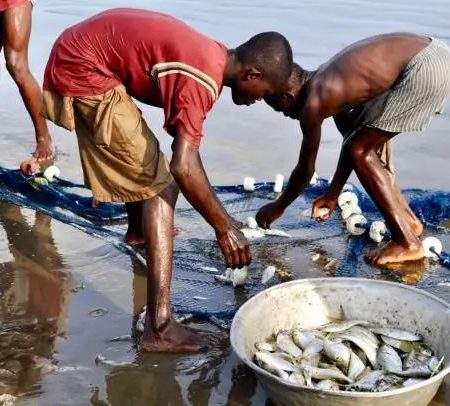
The waterways of the Niger Delta shaped Ijaw livelihoods and connected communities across a challenging landscape. Fishing, farming, canoe transport, salt production, and commerce formed the foundations of local economies before European contact.
Rivers and creeks served as routes for travel, exchange, and the establishment of new settlements. Over time, related communities developed distinct institutions and local identities across the central, western, and eastern delta.
This diversity is also reflected in language. Izon, Nembe, Kalabari, Kirike/Okrika, Ibani, and other related varieties preserve different expressions of the wider Ijaw linguistic heritage.
Spirituality, Art, and Cultural Heritage
Water occupies a central place in Ijaw artistic and spiritual traditions. Masquerades, carvings, music, and ceremonial performances express relationships with ancestors, aquatic beings, and the forces associated with community well-being.
Among the Kalabari, the “Ekine society” is an important institution devoted to masquerades representing water spirits. Across Ijaw artistic traditions, aquatic imagery reflects the significance of rivers and the sea to livelihood, protection, and belonging.
These practices vary between communities, contributing to the richness of Ijaw cultural heritage.
Communities, Kingdoms, and Atlantic Commerce
Ijaw political life historically included both village communities and larger kingdoms or trading states. By the late fifteenth century, organised settlements and emerging states were already present in the delta.
European commerce subsequently strengthened several coastal centres. Bonny, Kalabari, and Nembe became influential intermediaries between inland markets and overseas merchants.
Their history also includes participation in the transatlantic slave trade—a period that generated wealth for powerful trading establishments while inflicting profound suffering on enslaved people.
During the nineteenth century, trade increasingly shifted toward palm oil and other produce. The region became known as the “Oil Rivers”, a name originally associated with palm oil rather than petroleum.
Resistance to Colonial Expansion
The expansion of British commercial and political power threatened the independence of delta trading states.
“King Jaja of Opobo”, who rose from enslavement in Bonny to become a powerful trading-house leader, established Opobo in 1869. He resisted British interference in his commercial authority and was arrested and exiled in 1887. His legacy remains important to Ibani history and the wider history of resistance in the Niger Delta.
In “1895”, King Frederick William Koko of Nembe led an attack on the Royal Niger Company’s station at Akassa following conflict over restrictions on trade. British retaliation devastated Nembe. The Akassa conflict became a defining episode in the struggle to defend local economic and political independence.
Petroleum and the Struggle for Recognition
The discovery of commercially viable petroleum at “Oloibiri in 1956”, in present-day Bayelsa State, transformed the economic importance of the Niger Delta.
As petroleum became central to Nigeria’s economy, demands for local development, representation, and a fair share of resource wealth grew.
In February 1966, “Isaac Jasper Adaka Boro” proclaimed a Niger Delta republic. Although his uprising was defeated after approximately twelve days, he became an enduring symbol of the struggle for recognition and resource justice.
The creation of Rivers State in 1967 and Bayelsa State in 1996 changed the political framework for many Ijaw communities. Ijaw populations nevertheless remained distributed across several states.
The Modern Ijaw Movement
Organised advocacy brought communities together around shared concerns. The Ijaw National Congress emerged in the early 1990s as an institution for articulating collective aspirations and grievances.
On 11 December 1998, youths meeting at Kaiama formed the Ijaw Youth Council and adopted the “Kaiama Declaration”. It connected environmental degradation and political marginalization with demands for community rights and control over natural resources.
The destruction of Odi during a military operation in November 1999 became another deeply significant event in Ijaw collective memory, reinforcing concerns about civilian protection and the treatment of oil-producing communities.
Preserving Our History
Ijaw history lives in language, ancestral narratives, community institutions, festivals, art, and the memories passed between generations. Elders, priests, drummers, and lineage custodians have played important roles in preserving this heritage.
Respecting ancestral traditions while supporting historical, linguistic, and archaeological research allows this history to be shared faithfully. From the remembered Oru foundations to the communities of the modern Niger Delta, the Ijaw story continues through the preservation of culture, the defence of community dignity, and the transmission of heritage to future generations.